Saturday, September 28, 2013
Survival in the Time of the Fools
This poster appeared on my Facebook page -- maybe from Upworthy or Give a Shit About Nature -- I'm sorry, I don't remember the source.
But I do remember the impact it made on me. "Just go." Stop being careful and cautious. Stop waiting for just-the-right-moment. Just go and embrace whatever you find.
"Go see all the beauty in the world". Yes! There is beauty. Hope. Strength. So much beauty to celebrate and take in with a grateful heart.
I need to keep this sentiment close by these days. It is my survival in this time of fools and charlatans.
Thursday, August 29, 2013
Ethical Energy: No Nukes 1989 - 2013
1989
Clamshell Alliance against the Seabrook Nuclear Power Plant
We marched along the roadside in tiny Seabrook, New Hampshire to protest the construction of the Seabrook Nuclear Power Plant. Some people climbed fences and committed civil disobedience. Some were arrested. Some of us posted bail. We went home to engage our neighbors, our politicians, the state regulatory boards. Then we headed back to the streets.
It was but one moment among the many shared by people around the world who knew nuclear power was dangerous and risky. The consequences of a nuclear accident should have stopped this technology in its infancy. But, of course, it did not.
Earlier this week, I was brought back to this fight over ethical and safe energy when Entergy Corporation announced it will decommission the Vermont Yankee Nuclear Power Station in Vernon, Vermont. By the end of 2014, the Vernon, Vermont station, one America's oldest and "most controversial" nuclear plants, will stop due to financial reasons.
Vermont Yankee has been the target of protests from day one. Over the past several years, there have been a series of radioactive tritium leaks into the ground and water at the Vernon plant. "No risk to the public", they said, and I wonder who dares believe such lies.
Corporations like this have no legitimacy, no credibility. They are tarred by Fukushima, Chernobyl, and Three Mile Island, as well as the thousands of "incidents" we the public have never heard of.
Consider this: In 1989, we did not have a solution to the radioactive waste produced by nuclear power plants. Now, 24 years later, we still have NO SOLUTION and NO PLACE to put things like spent fuel rods.
So, I gain only a measure of satisfaction from closing Vermont Yankee. I am more disgusted and concerned that radioactive materials and residues will continue to poison that site in southern Vermont.
I'm disgusted these decisions are based on money (and shareholders) instead of what's "safe" or "right" or "ethical".
I wonder why people go nuts when one person catches West Nile virus from mosquitos, but overlook the specter of radiation leaks from aging nuclear plants and ineffective storage/containment practices.
Do you live within 50 miles of a nuclear power plant? I bet you do.
Entergy helps me be more hopeful that this financial disease will spread and we'll read about a decision to decommission the Seabrook Nuclear Power Plant in New Hampshire sometime soon.
Vermont Yankee has been the target of protests from day one. Over the past several years, there have been a series of radioactive tritium leaks into the ground and water at the Vernon plant. "No risk to the public", they said, and I wonder who dares believe such lies.
Corporations like this have no legitimacy, no credibility. They are tarred by Fukushima, Chernobyl, and Three Mile Island, as well as the thousands of "incidents" we the public have never heard of.
Consider this: In 1989, we did not have a solution to the radioactive waste produced by nuclear power plants. Now, 24 years later, we still have NO SOLUTION and NO PLACE to put things like spent fuel rods.
So, I gain only a measure of satisfaction from closing Vermont Yankee. I am more disgusted and concerned that radioactive materials and residues will continue to poison that site in southern Vermont.
I'm disgusted these decisions are based on money (and shareholders) instead of what's "safe" or "right" or "ethical".
I wonder why people go nuts when one person catches West Nile virus from mosquitos, but overlook the specter of radiation leaks from aging nuclear plants and ineffective storage/containment practices.
Do you live within 50 miles of a nuclear power plant? I bet you do.
Entergy helps me be more hopeful that this financial disease will spread and we'll read about a decision to decommission the Seabrook Nuclear Power Plant in New Hampshire sometime soon.
No matter what, I'll keep advocating for ethical energy resources -- resources that do not deplete and poison the earth nor kill or maim life in any form.
We've tried the other way -- big, exclusive, greedy, dirty and destructive -- and we've reaped a big, dirty, greedy and destructive system.
It's time to think very, very differently. More humane. Sustainable. Think about affordable, local energy sources. Think equity. Work with natural cycles, not in spite of them. Think "big picture" and "long term".
A saying from past years:
"Humans aren't the only species on the planet; they just act like it."
How about?
"Humans aren't the only species on the planet -- to go extinct."
Author's Note: I dedicate this last saying to the Climate Change Deniers, the current Congress, palm oil and soybean mono-plantations in Borneo, Brazil, and in rainforests around the world. Giant oil and mining corporations, agribusiness, Monsanto gets a special rating. Gold mining with mercury in the Madre de Dios River (Peru), members of the illegal animal trade throughout the world, people who run modern slave markets, sweat shops, racists and bigots... perpetrators, dictators, despots + misogynists... and finally to those good, quiet folk who sit in silence and say nothing, not even when they know what they see is wrong.
Wednesday, August 21, 2013
Sunday, July 21, 2013
Buddha in the Garden
I've been doing yoga once a week for about seven months, now. My initial intention was to help my (physical) balance and strengthen those core muscles. When I started, I could barely stand on one foot or even march in place. How did this happen? I, who was once a runner and more recently, a walker ~ how did I become this middle-aged woman who wobbled and scrambled to lean on the wall?
Throughout the fall and into winter, I reached for the sky and "walked the dog". I found my strength in poses like Bridge and Plank where I anchored myself with more than just my two feet. I missed days due to ice and snowfall, trips and vacations. There was short-term work like the Open (Writing) Institute in Newfound and days in schools sharing writing.
Now mid-July, I'm back on the mat. More flexible. Aware. Comfortable in my skin. I breathe the 3-part Yogic Breath and gently the world falls away. I stretch and reach, bend and fold. I think my way into Warrior 2. On each in-breath, I reach further, move my hands in micro-bits, feel my way to my toes.
Sitting in silent meditation, I sense the summer green and heat. Leaves and flowers brush my body. Birds sing in the trees nearby. Like Buddha in the garden, balance settles from the inside, out.
Throughout the fall and into winter, I reached for the sky and "walked the dog". I found my strength in poses like Bridge and Plank where I anchored myself with more than just my two feet. I missed days due to ice and snowfall, trips and vacations. There was short-term work like the Open (Writing) Institute in Newfound and days in schools sharing writing.
Now mid-July, I'm back on the mat. More flexible. Aware. Comfortable in my skin. I breathe the 3-part Yogic Breath and gently the world falls away. I stretch and reach, bend and fold. I think my way into Warrior 2. On each in-breath, I reach further, move my hands in micro-bits, feel my way to my toes.
Sitting in silent meditation, I sense the summer green and heat. Leaves and flowers brush my body. Birds sing in the trees nearby. Like Buddha in the garden, balance settles from the inside, out.
Sunday, June 09, 2013
A Love of Diversity and Cultures
Cold, rainy day ~ we followed directions to the Mariposa Museum from a postcard I picked up somewhere, sometime, years ago.
We drove back roads through Franklin, Salisbury, Webster. We tried to remember names of people we once knew. Gerry somebody from the Launch program at SYC. In Webster, we saw the elementary school where Cat taught Kindergarten and where Barry played pennywhistle and sang "Flop-eared Mule" with her class.
The bridge to Main Street led us into a timeless space where we discovered familiar landmarks and the magical Mariposa Museum, an apparition of beauty and diversity.
Puppets. Drums. Gongs. Clothing and jewelry. Artifacts from around the world.
Books. Maps. Games. Textiles.
The museum is a collection, a celebration, a prayer for Peace, the Earth and its Peoples and Creatures.
My dreams and beliefs,
my love and delights
made visible
Stories and legends,
antiquities of a shared
humanity
These are my riches,
my treasures
beyond measure
On a cold and rainy
June afternoon
at the Mariposa.
Sunday, May 19, 2013
WHAT KEEPS ME WRITING?
This blog entry comes from a course I'm taking right now through the New Hampshire Writers Project. Mary Carroll Moore teaches about the structure of books: "How to Plan, Write and Develop a Book"
She's just the right teacher with just the right content at just the right time for me. Her latest assignment: Design your book cover.
She got me thinking as well: What keeps me writing!
READERS
1. Writing groups and supportive friends ~
generous, witty, intelligence.
2. Making time for me and writing.
3. My wonderful "field office" ~ the writing shed.
4. Reading ~ A lifetime of reading.
Love of the Story!
5. Barry.
TRAVEL
6. I love this big, big world ~ with all its contradictions.
7. Children. Young people. Anyone under 25
(maybe 30).
8. My love of the natural world ~ wilderness.
9. My beliefs in social justice for all.
No exceptions.
LEARNING
10. Writing with others ~ anywhere, any age and in any language.
11. Teachers and programs from elementary school to now.
Sometimes the teacher, always the student.
12. Curiosity.
Endless, boundless, fearless curiosity.
So, what do you think? Favorite cover? Not yet? Stay tuned for more.
Sunday, April 14, 2013
Part One: The Beach
| Playita Beach in Las Galeras, Dominican Republic |
![]() |
| Simple Elegance in our room at Sol Azul |
The first part of the trip was the beach, a bit of heaven in March for two New Englanders. We stayed once again in the small village of Las Galeras, at the very tip of the Samana Peninsula.
We met friendly, interesting people from all over Europe--Germany, Finland, France, Italy -- and we talked about the things we all care about deeply. Education. The environment. Traveling. How to balance jobs and what we really love to do. And, I always marvel at how much we humans share in common... once we stop and listen.
In town and on the beach, we spoke our "Tarzan" Spanish with lots of gestures and laughs. The local folks, mostly Dominicans and Haitians, work in the restaurants and drive the motobike taxis. They navigate the boats on every beach. They cook wonderful wood-fired pizza and grill fish wrapped in banana leaves.
Barry's love of the birds and plants created connections on every corner. He asked the names of fruits and critters from the people who lived and farmed beyond the main street. He shared his bird photos and learned even more. He was interested in the crops and wondered why no one composts (spiders, snakes and millipedes, so he was told).
So we read and went swimming. We snorkeled with a Japanese man who has spent years preserving local coral reefs and the fish species within the reef. We watched small silvery schools of minnows and trumpet fish slide in and out of the seagrass.
He showed us puffer fish, jacks, a host of surgeon majors, and one deadly lion fish. We saw different kinds of coral in his protected place -- more than anywhere else on the peninsula. It's clearly his love, his passion, his livelihood.
Mother Teresa said, "Peace begins with a smile."
I think communication and connection starts the same way.
That's how it was for us these past few weeks.
Wednesday, February 27, 2013
A Little Art on Snowy Nights (and Days)
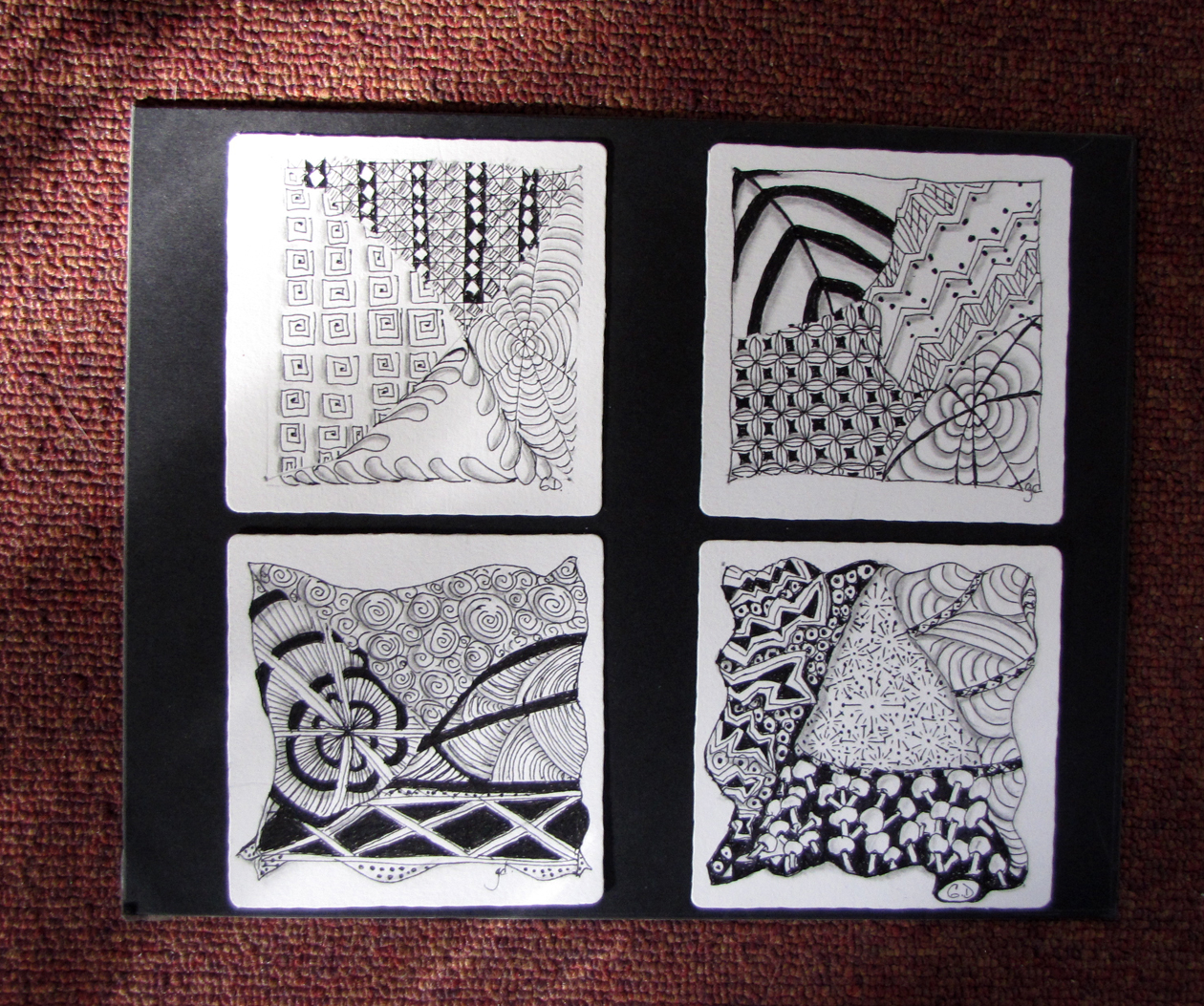
| Zentangle -- using patterns in art as meditation |
It's a creative winter for me -- something else I love! I've been learning Zentangle, created by Rick Roberts and Maria Thomas, as a tool for meditation, focused attention, creative surprises and fun.
My friend is a certified Zentangle teacher, and after attending two of her classes, I'm hooked. Enchanted. Absorbed.
| The Work in Progress |
She believes in the power of art, pictures, and collage as a writer's way of exploring the work. Me, too! Here's the start of my collage, a story in visual images and patterns. It promises to blossom along with my book.
| Then, there is the natural wonder all around us. |
My main Muse.
My heart.
The source of Life and Hope.
Tuesday, February 12, 2013
BLACK HISTORY MONTH in a KENYA PASS BOOK
...So many things we must not forget...
This February, Black History Month, I revisit the hard truth of Lincoln and Emancipation, the U.S Congress and its long practice of shielding the status quo, and how the past is prologue. Still today, we blind ourselves to slavery, torture, death, cruelty and discrimination in its many different forms in our own country and across the world.
...So Much Evidence... So Many Stories...
![]() |
| Kikuyu, Embu & Meru Pass Book Male Colony and Protectorate of Kenya Issued December 6, 1957 |
![]() |
![]() |
2007. Outside of Nairobi, Kenya I found this man's Pass Book in a shop selling artifacts of Africa. There among the masks and cloth, wooden instruments and beadwork sat this well-worn brown book. Gathanga Kangotu, a farm laborer, had to carry this booklet with him at all times. If he wanted to leave his district, he had to get permission -- a Movement Permit -- signed by a local British Control Officer. If he didn't...?
He was a Kikuyu in the Fort Hall District, Location 8. His residence permit was the town of Eldoret on the farm where he was employed by E.H. de Waal Sr.
Gathanga traveled very little. He received permission to travel to his new job on a farm. Once he received the official stamps to go to the dentist. In January 1959, he had two weeks leave from work.
But if this seems like limited travel over two years, a woman's Pass Book on the same shelf held no evidence, no written requests, no issuing permits. She stayed wherever she was during the entire time of the Pass Laws in Kenya.
In searching for information on the pass books, I found very little on the Internet. Kenya was Britain's East Africa Protectorate from 1895 to 1920 and its Colony from 1920 to 1963. In 1952, the Mau Mau Uprising challenged British rule. It was then the government issued the Pass Laws and controlled people's freedom of movement.
What do I think? The heart of this book rests in Why and How it was used. Why it existed. Who protested. Who did not. How many died because of these laws. How many truncated lives and dashed dreams are contained within these small brown booklets. How much rage and loss stains the collective pages.
What do I wonder? How does this history linger into the present. And where else in the world can we find pass books, colonization and slavery -- Now -- still alive, still ignored, still and always, morally wrong.
Tuesday, January 01, 2013
THE NEW YEAR
| Feels like the New Hampshire of Old |
Thigh-deep snow was common then. We cross-country skied at Dartmouth and along the logging roads from Cat and Skip's in Sanbornton. We stayed at the Franconia Inn and skied from the back door through groomed trails under the shadow of the White Mountains.
Our first winter on Blake Hill, we skied down the road during the blizzard that closed the hill and most of the schools and businesses in New England. We snowshoed the Greeley Ponds off the Kancamangus and ended up at a contra dance in Tamworth with Dudley and crew. Blazing fiddles and the concertina lit up the dark and kept us warm long into the night.
I was drawn back into these memories on Saturday during the Audubon Christmas Bird Count. Our territory covered neighborhood feeders, small ponds, the fish hatchery, and a network of country roads crisscrossing the hills. Here we found old settlements and familiar names from New Hampshire history.
New Chester Road. Knox Mountain Road. Up Burleigh Mountain and Calef Hill. Hale Road to Brook Road and over Bennetts Ferry. These were once thoroughfares for coaches and horses. Grand old farmhouses endure behind stone walls and ancient trees.
The roads we followed led us deeper into a time long gone. We counted birds -- cardinals and chickadees, blue jays and nuthatch, mallards and black ducks, hairy and downy woodpeckers, starlings, crows, and hawks. A white-tailed deer watched us from his place by a stone wall.
We witnessed the way nature is when a sharp-shinned hawk took down an exhausted black duck. It was shocking but also quick and silent. And, the hawk had food for another day.
At the same time we were counting birds, twenty cars were piling up on both sides of the interstate near our town exit. Five people were hurt. Many of the cars were totally wrecked. One witness said no one slowed down even after it was apparent the road conditions were deadly.
What a contrast! Old dirt roads and new highways. Slow and fast. Attention. Inattention. Choices and consequences. I wonder if it's the way nature is when people feel entitled to speed, or think themselves beyond the reach of events, like unexpected snowstorms and poor driving conditions.
It snowed into the evening. We made our way home over the back roads, our thoughts full of the sights, the places, the birds of the day. We spoke of the memories stirred, of old friends, old times and old ways.
~Happy New Year~
Friday, December 21, 2012
A TEACHER'S CHRISTMAS 2012
![]() |
Simple Gifts
|
Earlier this morning, people stopped for a moment of silence -- a lament -- for the tragedy and carnage of last Friday's attack on the Sandy Hook Elementary School in Newtown, Connecticut. It's one of those things we do in our grief. We pause. We pray. We ring bells and remember the dead -- soldiers, saints, civilians, children and their teachers.
This tragedy feels personal. I talk with my teacher friends, and we are overwhelmed with respect for our colleagues, teachers, principal and staff at Sandy Hook Elementary School. We're in awe of their courage and deep commitment, even in the midst of terror.
We ache for those who lived and saved the students in their care, those who died trying to protect children, and those teachers who heard the chaos over the intercom and then acted.
The tragedy touches us, too, because we share that insider's knowledge of elementary schools, the office, the hallways, and the bright, active classrooms.
We know how children shine in their light and joy for Christmas. They laugh easily and dance down corridors. They love glitter, lots and lots of glitter. We all sparkle in unexpected places after a week of making cards and gifts.
This is a tender time during the school year. We share gifts and excitement. We adults get to learn from our students about delight and surprise, belief and faith, anticipation and innocence.
Today is the Solstice, the day when darkness gives way to light. In many ways, we carry forth the same message as the ancients:
Light and dark, joy and suffering,
hope and despair, life and death,
where there is one, you will know the other.
Saturday, November 24, 2012
GRATITUDE
| Mt. Washington |
It's that time of year when we're drawn to the well-laden table where we offer our gratitude, our thanks and our blessings. My heart holds a bounty of good this November -- so unlike years past. I stand reminded by the Wise Ones: Things change. Conditions shift and nothing ever stays the same, no matter how stuck life might seem.
On Tuesday November 6, we voted at the Town House and then drove north. For us, this election was clear-cut. No questions. No dithering. The choices were black and white, and we voted black.
We voted for what we value and cherish -- human rights, women's' rights, the environment, education, single payer healthcare, diversity, peace, the arts, economic justice, social justice, civil rights. We voted for all those things the Republican platform threatened to end, abolish and corrupt.
Rather than sit home and endure the telephone invasion of PACs and candidates, we headed north into the vast and implacable beauty of the White Mountains. It was a day for far vistas. The trees were bare and the cold air cut clean to the bone. Granite and fir were encased in snow and we counted more ducks than people, just as we had hoped.
Late that night and into the next day, I watched the numbers turn into victories. New Hampshire scored a first and elected a woman governor and two women to the House of Representatives. They join our two women senators to make an all-women Congressional team. A first in U.S. history...
Even the power in our state legislature shifted, and the right-wing idiots with their guns and prejudices will be sent home in January. Stay there. Don't even think about coming back.
What irony! Florida's electoral votes were irrelevant. The Super Pacs did NOT prevail even with their billions of dollars. Karl Rove made a spectacle of himself and Fox News. Planned Parenthood lives on and we have another chance to reset the priorities of this nation.
During Thanksgiving grace, I added my quiet thoughts. I am thankful for a renewed faith in people. I feel hopeful and relieved, yet ready to act and raise my voice for what I love.
And when I doubt my own heart, I'll head north again to where the natural world endures with her healing gifts and lessons, her mountains and snows, trees and rivers, sun and shadows.
Sunday, November 04, 2012
Friday, October 05, 2012
SAVE BIG BIRD: Big Bird for President
| Big Bird in Taiwan |
Big Bird would make a great president. He represents the best of America -- its children, its openness to new ideas, its compassion, diversity and kindness. Big Bird tells the truth. Big Bird is a good listener. Big Bird has presence, yet does not misuse his power or prestige.
Remember this the next time we send troops and drones, bankers and "company men" to speak for us -- rather than the peacemakers and Big Birds of the world.
We saw evidence of Big Bird's global influence in Hualien, Taiwan. That yellow bird is a highly successful diplomat and has certainly logged more miles abroad than Mitt Romney. He's probably even better known than Romney!
So, during the presidential debates I want to hear: "Look, Big Bird did NOT cause the budget deficit."
Neither did "Masterpiece Theatre", "Frontline", "Mystery", POV -- and all the other programs on PBS. We cannot keep blaming education, healthcare, Head Start, Medicare, Community Action Programs, the National Writing Project or any other thoughtful, people-oriented programs for sinking our economy.
Instead, go after the decades of War and own what THAT has cost us in money, people, and social justice.
Go ahead. I dare you. Tackle greed, banking practices, and power --who has it, who doesn't, and who and what really rots our country.
Ask. Where's the outrage? Where's the change? Why do we let the corruption go on?
One thing is sure: Big Bird isn't a Republican. Maybe that's why they want to take away his job.
Thursday, September 27, 2012
NOTES FROM THE WILD: GROWING UP
| Young Loon at Big Brook Bog |
I love his eager eyes and what seems to be a faint smile on this young loon's face. Born in mid-June, he has grown from a small, brown fluff of feathers riding on his mother's back to the adolescent we see in this late August photograph taken on Big Brook Bog in Pittsburg, New Hampshire.
On that morning, he shadowed one parent and then the other -- fishing, surveying the bog below the water's surface, diving, and finally flapping his wings in anticipation of flight.
Now, in late September, he's ready to fly from the small bog in the northern woods to the sea where he winters.
We have followed three young loons this summer, one on Hermit Lake and two in the far north of New Hampshire. The three have survived predators -- bald eagles, snapping turtles, humans in boats, and human debris such as plastic bits, lead sinkers and fishing line.
They've built their strength on small fish and learned the tricks of their species from their parents.
We've watched the parent loons surround their babies when danger is near. We've heard the warning calls from one parent to the other. We've seen the male loons fly close by the large raptors and people in kayaks. They taunt and tease to bring the threat on to themselves, not their young.
Here is the reward of all that care. The time will come through weather and instinct. The three young loons will leave, alone, for new horizons and unfamiliar waters. They face enormous challenges -- survive the winter, find a mate, and return in spring to dance the dance and continue the cycle of life.
There are lessons here, if we choose to watch and listen.
Friday, August 31, 2012
END OF AUGUST
It was the end of August and time for our annual pilgrimage to the Great North Woods. The days were warm and sunny under a brilliant blue sky. We saw deer, otters, loons, hawks and harriers, fox and one very large, very dead porcupine.
We've been coming to northern New Hampshire since the summer of 1985. It's a place we love for its wildlife, vast stretches of forest, and its waterways.
Midweek we had a surprise shower, a real drencher, and we ended up sitting it out in the car. We had just enough time to paddle to the landing before the bog rocked with whitecaps and wind-driven rain.
After that storm, dense fog covered the waterways in the early mornings. The temperatures of water, air, and land were shifting, changing, signaling an end to summer.
| Big Brook Bog -- very early morning |
I moved forward cautiously, listening for the tell-tale sounds of moose or deer. Nothing. Nothing but vague shapes slipping in and out of the mist.
It was the storyteller's dream!
Faintly, a tussock of grass and scrubby shrubs formed in the mist and fog. It was then we knew the Trickster had played his hand and caught us in a terrific joke. We laughed and howled, and most likely, woke every living thing on water and land.
It was a very different sort of dream and magic!
Friday, August 10, 2012
RESTRINGING THE BEADS
Words pour across the page,
spill over the edge,
like so many beads from a broken
cord, falling from my neck.
They roll above wide pine boards,
lodge in wooden grooves
like wayward thoughts, I retrieve them
missing one, now two.
So much like beads from a shattered
strand, the words shift and change
restrung, refigured, recombined,
pattern, color, rhythm, line ---
what I see, redefined.
Saturday, June 30, 2012
SOMETHING TO BELIEVE IN
I have a whole new season in my life. Here it is the end of June and already I've watched trees bud and flower, birds arrive and fledge, the shades of green surround my house. I've been swimming and kayaking. We've had ferocious heat and thunderstorms the likes of August.
Some far future day, scientists will pinpoint 2012 as the turning point in Climate Change. It's happened. It's raging wildfires in Colorado, 108 degrees F. in the central United States, and flooding in the British Isles. It's the loss of glaciers and the water they provide for billions of people. It's New England blueberries ripe the end of June.
Exxon Oil's top banana-head was quoted saying, we can solve any climate problems with engineering. Ah, your engineered environment. Your engineered education. Your fake food. I grew up near Springfield, Massachusetts, home of Monsanto -- "your life on chemicals".
It's the zenith of stupidity.
How to stay sane in this society? I go to the wilderness again and again. Here in northern New Hampshire, I find something to believe in -- the eagles have returned. The snipe danced and called for mates on the 18th of June. The loons came back to the waterway of their birth and hatched one egg. The baby was in the water and swimming within forty-five minutes.
But, even my northern escape has changed immeasurably. The mountains host big, expensive summer homes. The small cabins are mostly gone or turned into what people seem to need in the wilds -- jacuzzis, Wi-Fi, and air conditioning. Northern Pass still threatens the people and the environment with its steel towers buzzing with DC power heading for Connecticut, Massachusetts, Washington, D.C.
So, I go into wild places and gather my strength from: A snipe calling...
| A Minke Frog |
![]() |
| Mother and baby loon. |
There's even the grave of a young veteran at Coon Brook Bog. His friends and family honor him often with flowers, a flag, and two turkey feathers.
Someone else believes in the sanctity of wild places. May they, too, find peace here.
Monday, May 28, 2012
EARLY SUMMER
![]() |
| Iris |
Now I read about the many varieties of iris. I'm most familiar with the bearded iris, Iris Germanica, found among the old New England homesteads. The books say this is probably a species bred and created, not a native to this New World soil.
It's an ancient flower, revered by Egyptians, Greeks, kings and artists. You find its glory painted by Van Gogh and emblazoned as the fleur-de-lis, symbol of the might of the French monarchy.
Iris was the Greek goddess who bridged earth and heaven with her rainbows. She was a message-bearer and the one who led the souls of dead women to the Elysian fields. Her namesake flower honored women's graves.
The flowers are famous for perfumes and dyes, orris root, old remedies for illnesses as well as for keeping kegs of beer from going stale.
All this history and story is embodied in the stately flowers now blooming in my wild, hillside garden. If I once dismissed irises as more suited to "old ladies' flowerbeds", I apologize. I stand corrected. I stand in awe of all I do not know about the power and mystery and lineage of this natural world --- its flora, its fauna, its geology, us.
So before they plant irises over my grave, I make a promise to myself and to the future. I pledge to love the pleasure and power of learning. I will look for wonder and discovery in things big and small. I will write and share my stories, mindful of my voice and the truth of what I witness.
I promise to be forever curious, a seeker of what I do not know.
Thursday, May 10, 2012
RAIN IN MAY
![]() |
| Suddenly It's Green |
I've been worried lately that we are finally living in Rachel Carson's Silent Spring. It's been too quiet. During the long, hot dry spell in April, we lost the vernal pools in our woods. We didn't hear wood frogs or birdsong at the usual times. We were harassed by brush fires and the threats of more damage from careless cigarettes, camping, or lightning.
Then, it rained.
Last night we listened to the peepers. Two barred owls argued over territory and mates. Their calls filled the woods by the house.
Earlier in the day we heard the robins and phoebes. Small warblers flit from branch to branch. And this morning the transformation grows -- indigo buntings, more warblers, birdsong -- everywhere, birdsong.
Spring is silent no more.
Saturday, April 21, 2012
SO TELL ME, HOW ARE YOUR ZOMBIES DIFFERENT?
...AND OTHER QUESTIONS WRITING TEACHERS ASK.
This would be a great title for a book on writing with middle school kids -- something I have just finished. For three Friday afternoons in April, I joined Writing Project teachers, college students, classroom teachers and 140 sixth, seventh and eighth graders in a project called WriteOn! at a local school.
It was the third year of WriteOn! and as is often the case now, the funds were cut for the grant. But at this school, the PTA decided a writing enrichment series for all the middle schoolers was important and it provided the money for the writers and materials. Good for them!
Our group had eight students covering all the grades. Some are avid writers and used the prompts to create pages and pages of new stories. Some hate writing. Some are very shy about sharing their work. Different teachers wrote with us each week -- and when teachers + students write together, the energy shifts. The power of words and ideas supplants the power of teacher over student, and we become one writing community.
One girl discovered Viking runes and made a series of coded sentences to decipher. One reluctant writer used a photograph from WRITE WHAT YOU SEE (Hank Kellner, Cottonwood Press). He wrote two pieces, one about his grandmother's dog named Baxter and one about dogs and babies and why people are drawn to them.
The Native American ledger drawings from the Hood Museum at Dartmouth College inspired seventh and eighth grade girls to write serious, detailed stories about a life on the plains and first encounters with white settlers. Some moved to poetry and personal essays on loneliness and belonging.
Two friends write war-adventure-espionage stories. This is where the zombies come into the writing. They support each other's work and listen intently when the other reads new parts.
In our "quick writes", the teachers also wrote about dogs and babies, loneliness and "lost love", bullies and heroes. I love how writing can be a great equalizer, a common ground for adults and young people to share.
Yesterday, we all were a bit sad to finish the WriteOn! series. We knew something good had happened. We had laughed together, shared thoughts through our writing and talking, and learned something new about each person, adults and young people. We had taken risks and explored new things.
In our "quick writes", the teachers also wrote about dogs and babies, loneliness and "lost love", bullies and heroes. I love how writing can be a great equalizer, a common ground for adults and young people to share.
Yesterday, we all were a bit sad to finish the WriteOn! series. We knew something good had happened. We had laughed together, shared thoughts through our writing and talking, and learned something new about each person, adults and young people. We had taken risks and explored new things.
This is why I love teaching and writing...
Why I believe in the future...
and in the young people who are its promise
and its heirs.
Thursday, April 12, 2012
EARLY APRIL
| Echo Lake - Franconia, New Hampshire |
I have been obsessed with the politics and bad news of the day to the point where I get depressed, sick, dispirited. It's not the way to live a life. I have to get outside into the natural world. Beauty. Mountains topped with snow. Cold, clear lakes. Blue, blue skies. The crisp definition of trees just before they leaf out.
This early April morning is testament enough -- birds returning to nest, buds about to burst, life bravely embracing the next step in its cycle and me, alive again and grateful to be connected to the terrifying beauty and mystery around me.
It's a comfort in a strange way.
Sunday, April 01, 2012
HOPE
![]() |
| Aung San Suu Kyi |
Aung San Suu Kyi has inspired me for years -- through her house arrest and imprisonment. Through her stolen election. Through the years of broken promises and indignities. But try as they might, the military junta could not silence her.
Two years ago, I wrote: "Never give up hope" when thinking of her. Five years ago, it seemed as if hope was a very small flame about to die.
Today, Aung San Suu Kyi has won a seat in the parliment. Everywhere she travels in Burma, she is met with joy and huge crowds who, like me, now overflow with Hope.
Two years ago, I wrote: "Never give up hope" when thinking of her. Five years ago, it seemed as if hope was a very small flame about to die.
Today, Aung San Suu Kyi has won a seat in the parliment. Everywhere she travels in Burma, she is met with joy and huge crowds who, like me, now overflow with Hope.
Monday, March 19, 2012
IT'S EARLY FOR NEW HAMPSHIRE
![]() |
| Spring |
We're a cautious folk in New Hampshire. We know this kind of weather in March is a huge teaser. "Wait until the big snow in April" we say and the audience shakes its collective head with the memories of apple blossoms drooping under heavy, wet snows.
But this is a new world where feeding the machine rules over common sense and caution, and where the collective memories no longer revere early Spring joys of tadpoles, vernal pools and the first peepers.
In this new corporate world, I wonder about Resilience: How to nurture resilience with dignity and truth. How to spring back and not be crushed by what is happening to social justice, human rights, our environment, our souls.
Mostly, I wonder how to keep celebrating what I know and love in a country gone mad. I'm drawn into an ancient struggle and I hope to surprise myself with what I discover along the way.
Friday, February 17, 2012
TELL ME A STORY OF PIGS
![]() |
| Adventures with Pigs |
You asked me what pigs eat. That's a good question. When I was a little girl, my grandfather and Nana raised pigs on their farm in Pittsfield, New Hampshire. In this photo, I'm about 3 years old. I wanted to take this little pig for a walk, but he was more interested in eating leaves in the path. I don't look very happy.
I remember I helped my grandfather feed the pigs. We mixed grain, molasses and water into a sweet-smelling mash. My grandfather poured the mash into a long wooden trough and the pigs stood side-by-side eating. They made snuffling and snorting sounds when they ate. They also had a fenced-in field in the summer where the pigs could run and eat green plants, leaves and other tasty bits. They always had water -- both in the field and in the barn.
Some people think pigs are dirty animals, but I remember how clean they were, especially outside in the fields. One of the big jobs on the farm was keeping the pens in the barn clean and full of straw.
My grandfather had a horse named Pancho, chickens, geese, and a cow. My Nana milked the cow and made butter from the cream. I loved visiting them on the farm. When I was older, I stayed for a few weeks each summer. Then, I helped in the garden. I picked peas and cucumbers. My Nana taught me how to make pickles and we entered a jar into the local fair. Our pickles won a blue ribbon!
I'm glad you asked about pigs. I had fun finding this old photograph from the summer of 1950. I like sharing stories of when I was a little girl. Ask me more questions!
Subscribe to:
Posts (Atom)